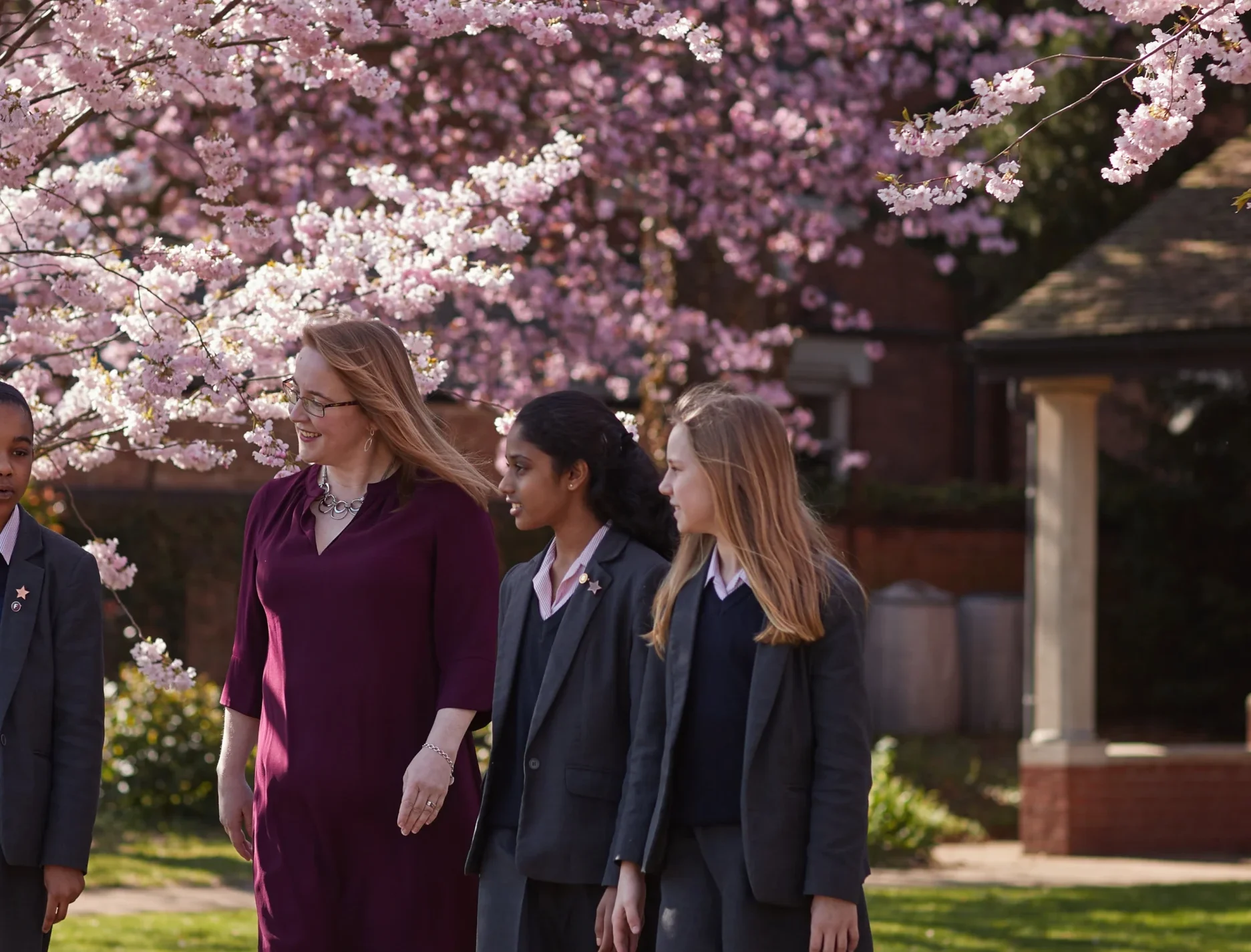
Limitless: Our future female leaders
Inspiring the next generation of women
International Women’s Day is always a moment for reflection – on progress made, on work still to do, and on the responsibility we carry as educators to widen horizons for the next generation of women.
My own journey into headship has been anything but linear. I began with a degree in English Literature before stepping away from teaching to study medicine. Qualifying as a doctor and working within the NHS was life-changing, and yet I found myself drawn back to education – to the energy, creativity and optimism of young people, and to the deep fulfilment of watching them grow.
Too many young people believe they must have everything mapped out by 18. They worry that changing direction signals failure. My own experience tells a different story. We are not fixed entities at 16, 18 or 28; growth requires courage.
That courage flourishes in an environment where aspiration is never capped. At Loughborough High School, our all-girls setting allows students to grow up never being hostage to the idea that certain subjects, careers or ambitions belong to someone else.
There is no sense that engineering, maths or business is “for boys” or that physics is unusual for girls. It is simply normal for all subjects to be accessible to all girls.
When alumna Riva-Melissa Tez spoke at our senior prize-giving last year, our pupils were inspired by a young entrepreneur whose work investing in artificial intelligence and cryptocurrency has earned her a place on the Forbes 30 Under 30 list. Yet although her achievements are remarkable, the fact that she as a woman has reached them is not- here, it is seen as the norm. Likewise, female teachers here who are scientists, medics, entrepreneurs and engineers contribute to school life as visible, credible role models. The message is clear: nothing is off limits.
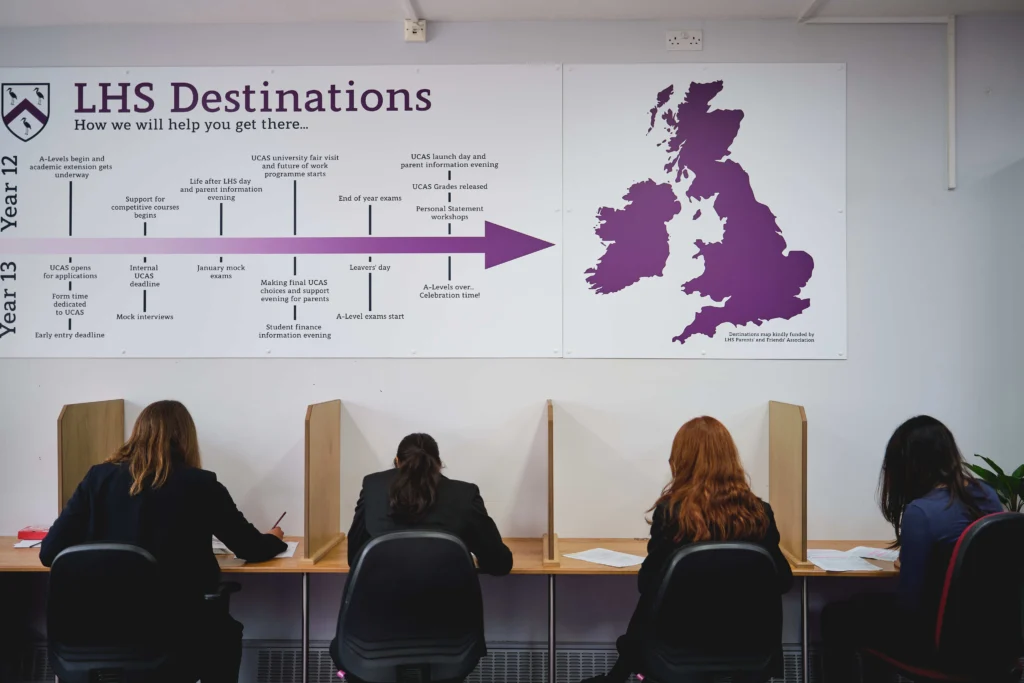
This philosophy underpins what we call “the school of her future”. Whatever our girls aspire to do, we are determined to equip them to do it, and to do it exceptionally well. Our futures provision begins in Year 7 and is highly personalised. We do not “sheep dip” students through generic advice; instead, we provide tailored, expert guidance. The results speak for themselves: strong progression to competitive courses, regular success in veterinary medicine and clinical pathways, degree apprenticeships in sectors such as IT and engineering, and offers to study Oxbridge.
Central to removing the lid on aspiration is refusing to rank subjects in a false hierarchy. An unhelpful narrative can position mathematics and science as somehow more rigorous or economically valuable than the arts and humanities. This is simply wrong. English demands precision, analytical rigour and clarity of argument. Science demands imagination, hypothesis and intellectual risk-taking. In both, students must apply knowledge – not regurgitate it. Whether treating a patient or writing an essay, you are given a scenario and must interpret, analyse and respond with creative thought.
In our classrooms, creativity and analytical thinking are deliberately intertwined. In the sciences, students undertake independent enquiry projects, presenting research with an eye to real-world application and entrepreneurial possibility. Through initiatives such as CREST Awards, girls have designed autonomous robots capable of extracting water in desert environments, combining physics, engineering and imagination. Meanwhile in the arts, precise technique, discipline and forensic attention to detail underpin creative expression. We celebrate the creativity of science, as well as the precision and rigour of arts and humanities in our teaching.
Our proximity to Loughborough University strengthens this culture of intellectual ambition, enabling collaboration with academics and projects that stretch far beyond the syllabus. Supported by teachers who are passionate about their disciplines, students regularly find themselves exploring ideas off-specification, forging into new areas of mathematics and science, and asking not only “How does this work?” but “Where could this lead?”
As we look outward this International Women’s Day, we must remember that access to education is still denied to millions of girls globally. In some parts of the world, fewer than one in five girls completes secondary school. Education remains one of the most powerful tools for breaking cycles of poverty, exploitation and ill health. Here, in our corner of the world, our responsibility is clear: to ensure that no girl ever places a ceiling on her own ambition.
This International Women’s Day, my message to our girls is simple: you can be many things – sometimes all at once. And nothing is out of reach.

Written by
Dr Fiona Miles
Head of Loughborough High School

Having spent my early life in Nottingham, I am delighted to have returned to the East Midlands to become Head of Loughborough High School. After studying English Literature at the University of Cambridge, I taught for several years before retraining at King’s College, London, to pursue a career in medicine. Subsequently, I returned to teaching and had a series of different roles at Haberdashers’ Aske’s School for Girls, including Head of English, Assistant Head and Deputy Head (Academic). I have also been a governor of a maintained primary school, a role which I found extremely rewarding. I am an enthusiastic amateur organist and pianist, and I play netball whenever I have the opportunity.
Empowering girls to shape their future
Celebrating International Women’s Day
This International Women’s Day, our fantastic Prefect Team organised a project to spotlight the women they’re inspired by. Using the prompt, ‘I am proud of the women that…’. they encouraged their peers to contribute examples of all the women who have had an impact on them. From authors to women in STEM, activists and mothers, …
Careers Networking Dinner launches
Inspiring legal pathways
On Monday 23 February, we proudly launched the first in a new series of Careers Networking Dinners – an initiative designed to connect senior pupils with accomplished alumni to provide a meaningful insight into life beyond school. Delivered in partnership with the Alumni and Development Office, the inaugural event focussed on careers …
Driving success
Loughborough Schools Foundation tees up new partnership with Longcliffe Golf Club
Loughborough Schools Foundation (LSF) is delighted to announce a new partnership with Longcliffe Golf Club, creating an exceptional opportunity for pupils across the Foundation to develop their skills in one of the region’s premier golfing environments. The partnership will offer structured coaching for pupils …
We’ve been shortlisted for AMCIS 2026 IMPACT Award
Loughborough Schools Foundation has been shortlisted for AMCIS 2026 IMPACT Award following proactive response to rising risk of AI manipulation and online exploitation.
Loughborough Schools Foundation’s sector-leading approach to the use of pupil images across digital channels has been recognised with a shortlist nomination for a AMCIS 2026 IMPACT Award in the Branding category. At …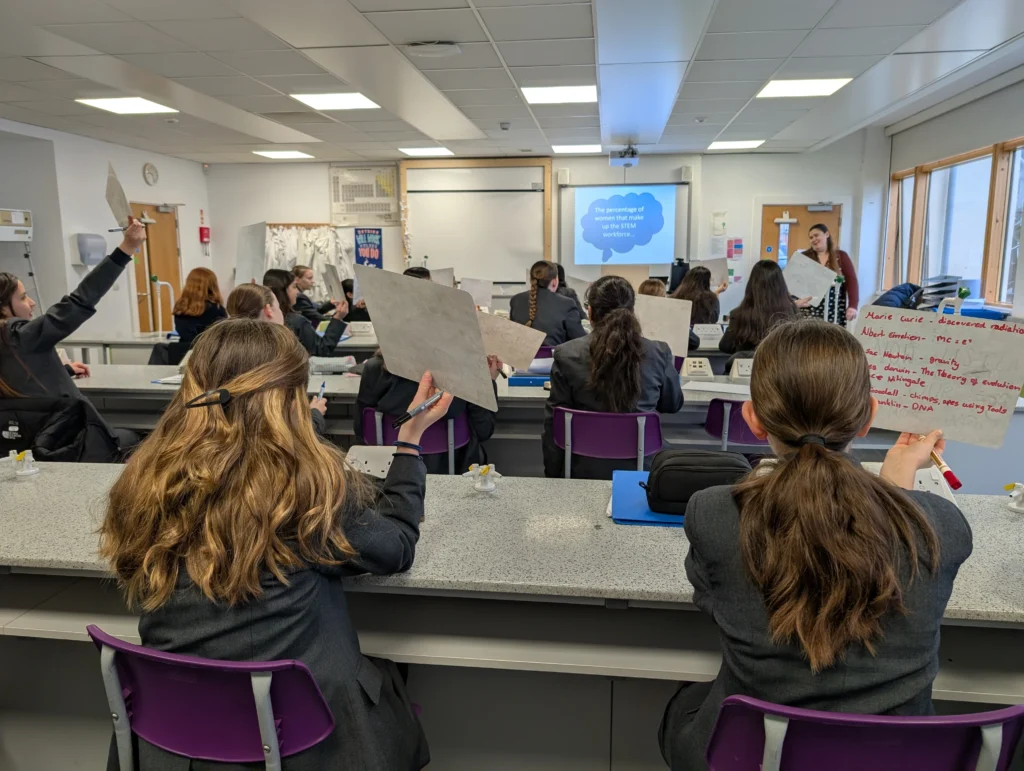
Women and girls in STEM
The stories of our STEM specialists and students
Today, women make up less than one third of the world’s researchers, according to UNESCO. They are particularly under-represented in Science, Technology, Engineering and Maths (STEM) education, making up only 35% of STEM graduates. If girls grow up repeatedly hearing that logic, problem-solving or technical thinking are somehow more …Discover More
Related Pages

Our aims
At Loughborough High School we believe that a happy school environment naturally leads to success.
Our alumni
Discover the inspiring stories of our alumni.
Futures and destinations
Find out more about the university and careers support our pupils receive.